



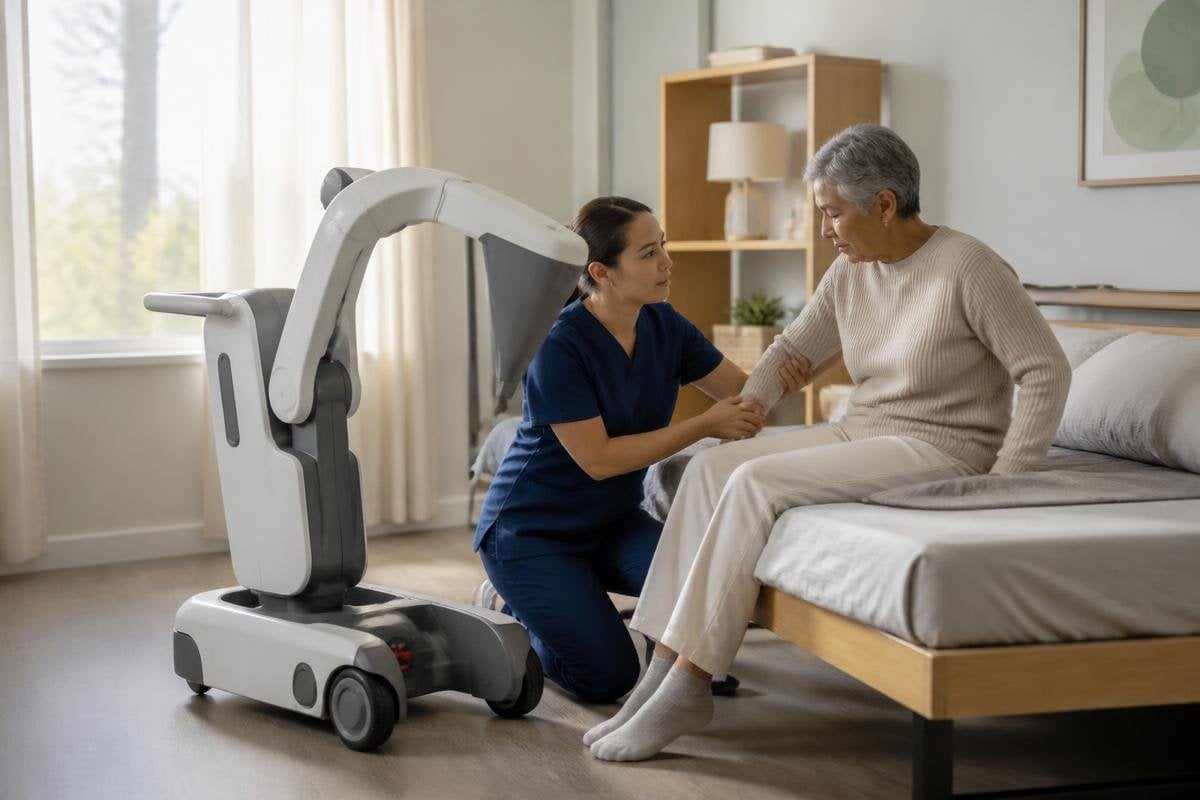
A robot working near an older adult, child, or patient carries a different risk from one moving boxes in a fenced work area. Trust depends on the task, the person, and what happens when the robot gets confused.
- A robot should have a clear human handoff for unsafe or uncertain tasks.
- Consent, privacy, and physical safety need checks before deployment.
- A care setting needs records that show what the robot did and why.
Trust depends on the task
A robot reminding someone about a scheduled activity faces a smaller physical risk than one lifting a person from a bed. That difference should shape the approval process, the sensors, and the level of human control.
The same robot may be suitable for one task and wrong for another. Carrying sealed supplies along a marked route is easier to review than deciding whether a person is in pain or needs urgent help. A machine can detect motion, speech, or a fall, but those signals don’t explain the full situation.
The person receiving care needs a clear choice. They should know when a robot is active, what it can record, who can view the data, and how to ask for a person instead.
A consent form alone won’t answer those questions if the explanation is hard to follow.
A human must be able to take over
Autonomy means the robot can act without a person directing each movement. That can save staff time for routine work, yet it also creates a handoff problem when the robot meets something outside its training.
A safe system should stop or ask for help when its camera loses the person, its route is blocked, or its force reading changes. The request needs to reach a named operator who can see the situation and act without hunting through several menus.
That process should be tested before the robot works near people. The test needs to cover a lost connection, a flat battery, a blocked doorway, a mistaken identity, and an emergency stop. If staff can’t explain the response in plain words, the setup is too hard to trust.
A care robot’s safety record also includes what its camera and microphone collect, where that data goes, and who can access it. Robot24.com reports on care robots can tie those privacy claims to named machines and test settings. A system may protect someone’s body while exposing their private life.
Privacy is part of physical safety
A care robot may need cameras, microphones, location data, or health information to complete a task. Each sensor adds a reason to limit collection, storage, and access.
The operator should be able to answer four basic questions: what data does the robot collect, where does it go, how long is it kept, and who can change the system? Clear answers matter more than a long privacy notice that nobody in the room can explain.
Logs also need care. A useful record can show when the robot received an instruction, detected an obstacle, stopped, or called a person. That record helps staff find a fault, yet it should not become a permanent file of private conversations or daily routines.
What still needs proof
A demonstration can show that a robot completes a task once. It doesn’t show how the system behaves after a poor night of sleep, a crowded room, a new wheelchair, or a person who refuses to cooperate.
A buyer should ask for evidence from the intended setting. That may include failure records, incident reports, operator response times, maintenance rules, and results from repeated tests with the people who will use the system. Claims about care work need proof from care work.
I’d trust a robot around vulnerable people only when a person can take control quickly, the task has a narrow purpose, and the operator can explain every major failure mode.
A practical approval checklist
Use these checks before a pilot starts:
- Name the task: Write down the exact action the robot may perform and the actions it must refuse.
- Set the handoff: Give staff a visible stop control and a clear route to a human operator.
- Check consent: Explain sensing, recording, and human review in words the person can understand.
- Test failures: Run blocked paths, lost links, low battery, wrong-person alerts, and emergency stops.
- Review records: Decide who checks logs, how faults are reported, and when stored data is deleted.
- Watch the pilot: Set a review date before deployment, with a named person who can pause the system.
The next decision is practical: match the robot to a narrow task, set a human response, and collect evidence from the people affected. Until those records show safe performance outside a staged demonstration, the robot should assist under supervision rather than work alone.
