



Introduction
Modern warfare and defense operations rely heavily on precision, autonomy, and resilience in environments where traditional navigation systems may fail. One of the most critical technologies enabling this capability is The Role of Inertial Navigation Systems in Modern Defense Technology. These systems provide accurate positioning and guidance without depending on external signals like GPS, making them indispensable in military applications where signal jamming, spoofing, or denial is common.
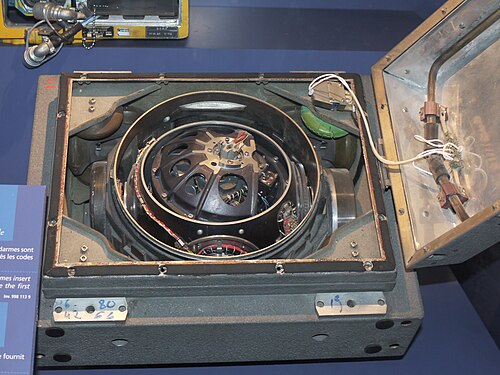
Inertial Navigation Systems (INS) use internal sensors—primarily accelerometers and gyroscopes—to calculate an object’s position, velocity, and orientation. Their ability to function independently of external references has made them a backbone of modern defense platforms, including missiles, submarines, aircraft, and autonomous drones.
Understanding Inertial Navigation Systems
At its core, an Inertial Navigation System is a self-contained navigation mechanism. It continuously tracks movement by measuring acceleration and rotational motion. By integrating these measurements over time, the system estimates the current position relative to a known starting point.
There are three main components in an INS:
- Accelerometers: Measure linear acceleration along different axes
- Gyroscopes: Measure angular velocity and orientation changes
- Processing Unit: Computes position and velocity using sensor data
Unlike satellite-based navigation systems, INS does not rely on external communication. This makes it highly resistant to jamming and electronic warfare tactics.
Importance in Military Applications
The significance of The Role of Inertial Navigation Systems in Modern Defense Technology becomes especially clear in combat environments where GPS signals can be unreliable or deliberately disrupted.
Missile Guidance Systems
One of the most prominent uses of INS is in missile technology. Ballistic and cruise missiles depend on inertial navigation during flight to maintain trajectory accuracy. Even if GPS signals are jammed, the missile can still reach its target using pre-programmed coordinates and internal motion tracking.
Submarine Navigation
Submarines operate in deep underwater environments where GPS signals cannot penetrate. INS allows submarines to navigate stealthily and accurately over long distances without surfacing, preserving operational secrecy.
Military Aircraft and UAVs
Modern fighter jets and unmanned aerial vehicles (UAVs) rely on INS for stable navigation during high-speed maneuvers or in contested airspace. It ensures continuity of navigation when satellite signals are degraded or unavailable.
Advantages of Inertial Navigation Systems
The growing importance of The Role of Inertial Navigation Systems in Modern Defense Technology is driven by several key advantages:
1. Independence from External Signals
INS operates without reliance on GPS or communication networks, making it immune to signal interference.
2. High Reliability in Hostile Environments
Since it is self-contained, INS continues functioning even in electronic warfare conditions where other systems fail.
3. Real-Time Data Processing
INS provides continuous updates on position and velocity, enabling real-time decision-making in critical missions.
4. Stealth Capability
Because it does not emit signals, INS is ideal for covert operations where detection must be minimized.
Limitations and Challenges
Despite its advantages, INS is not without limitations. One of the main challenges is drift error. Over time, small measurement inaccuracies accumulate, leading to deviations from the true position.
To mitigate this issue, modern systems often combine INS with other technologies such as:
- GPS (Global Positioning System)
- Terrain-referenced navigation
- Star tracking systems in aerospace applications
This hybrid approach significantly improves accuracy and reduces long-term error accumulation.
Integration with Modern Defense Systems
The evolution of defense technology has led to advanced hybrid navigation systems that merge multiple data sources. This integration enhances reliability and precision in complex environments.
Sensor Fusion Technology
Sensor fusion combines data from INS, GPS, radar, and other sensors to create a highly accurate and stable navigation solution. This is particularly important for autonomous military systems such as drones and robotic vehicles.
Artificial Intelligence Enhancement
AI is increasingly being used to predict and correct INS errors in real time. Machine learning algorithms analyze sensor patterns and compensate for drift, improving overall system performance.
Strategic Importance in Modern Warfare
The increasing sophistication of electronic warfare has elevated the strategic value of inertial navigation. In environments where satellites can be jammed or spoofed, defense forces rely on INS to maintain operational capability.
This makes The Role of Inertial Navigation Systems in Modern Defense Technology central to modern military strategy. Nations investing in advanced INS capabilities gain a significant advantage in missile precision, stealth operations, and autonomous warfare systems.
Future Developments in Inertial Navigation
The future of INS technology is focused on improving accuracy, reducing size, and enhancing integration with digital systems. Some emerging trends include:
- Quantum inertial sensors with ultra-high precision
- Miniaturized INS for micro-drones and wearable defense tech
- Advanced AI-based error correction systems
- Greater integration with space-based navigation systems
These innovations will further expand the capabilities of defense platforms and reduce dependency on vulnerable external signals.
Conclusion
In conclusion, The Role of Inertial Navigation System in Modern Defense Technology is fundamental to the effectiveness of modern military operations. From missiles and submarines to aircraft and autonomous drones, INS ensures reliable navigation in environments where traditional systems cannot function.
As warfare continues to evolve into more electronic and data-driven domains, inertial navigation will remain a cornerstone technology, enabling precision, resilience, and strategic superiority on the modern battlefield.
